Can You Freeze Cream Cheese?
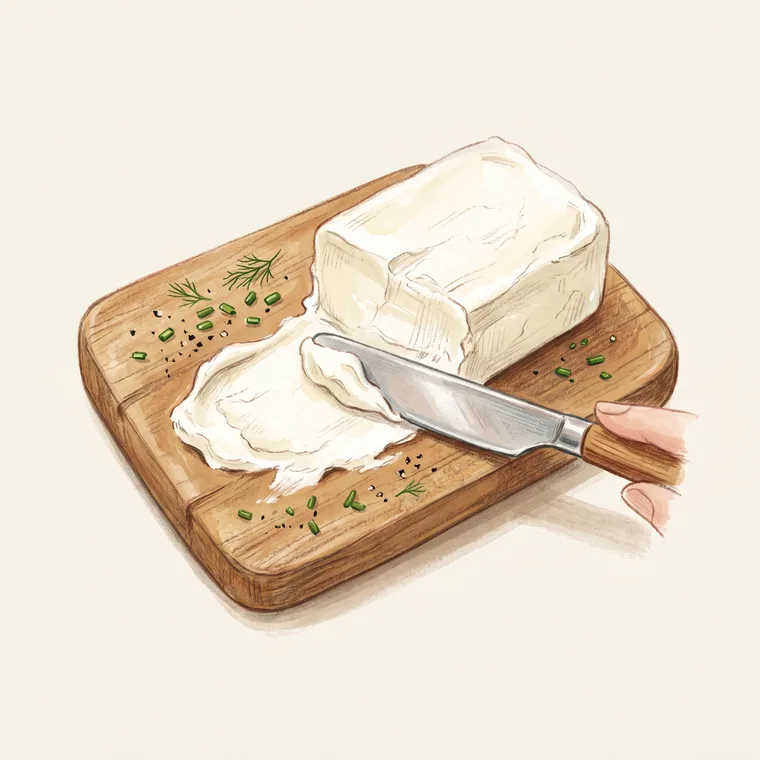
You can, but expect a trade-off. Cream cheese is a high-moisture fresh cheese, so freezing forms ice crystals that break its smooth emulsion; thawed, it turns grainy and crumbly. That is fine if you will melt or beat it into cheesecake batter, dips, sauces, or frosting, but poor for spreading on a bagel. Freeze it for about 2 months and reserve it for cooked or blended uses.
Can you freeze cream cheese?
Yes — with caveats- Freeze it before the use-by date, ideally still sealed in its original foil-wrapped block.
- If the box is opened, press the cheese into a small airtight tub or wrap it tightly in cling film then foil.
- Portion it into the amounts a recipe calls for so you thaw only what you need.
- Mark the block with the date and freeze it where it will not get crushed.
More in this group: Freezing dairy & eggs
Frequently asked questions
Why does cream cheese go grainy after freezing?
It is roughly half water, held in a soft net of milk protein and fat. Freezing turns that water into ice crystals that puncture the net, so on thawing the curds clump and weep, leaving a grainy, slightly crumbly texture instead of a smooth block.
Can you use thawed cream cheese in cheesecake?
Yes — cheesecake is one of its best second lives. Once you beat the thawed cheese smooth and bake it with eggs and sugar, the graininess disappears entirely. The same is true of dips, sauces, and frosting, where heat or whipping re-blends the texture.
Is it better to freeze cream cheese in the block or whipped?
Freeze the solid block. Whipped cream cheese has air beaten into it and separates even more dramatically when frozen and thawed. A sealed foil block holds together best, and you can always whip it after thawing if a recipe needs it.
How long does cream cheese keep in the freezer?
Give it about two months before quality slips. A steady 0 °F (−18 °C) keeps the block safe much longer, but the grain only deepens over time, so reach for it sooner rather than later, and follow USDA guidance whenever you have doubts.
Sources
- National Center for Home Food Preservation — Freezing Cheese — University of Georgia / NCHFP, checked 2026-06-13
- NDSU Extension — Freezing Dairy Products, Eggs and Other Foods — North Dakota State University Extension, checked 2026-06-13
- USDA FSIS — Freezing and Food Safety — USDA FSIS, checked 2026-06-13