Can You Freeze Half-and-Half?
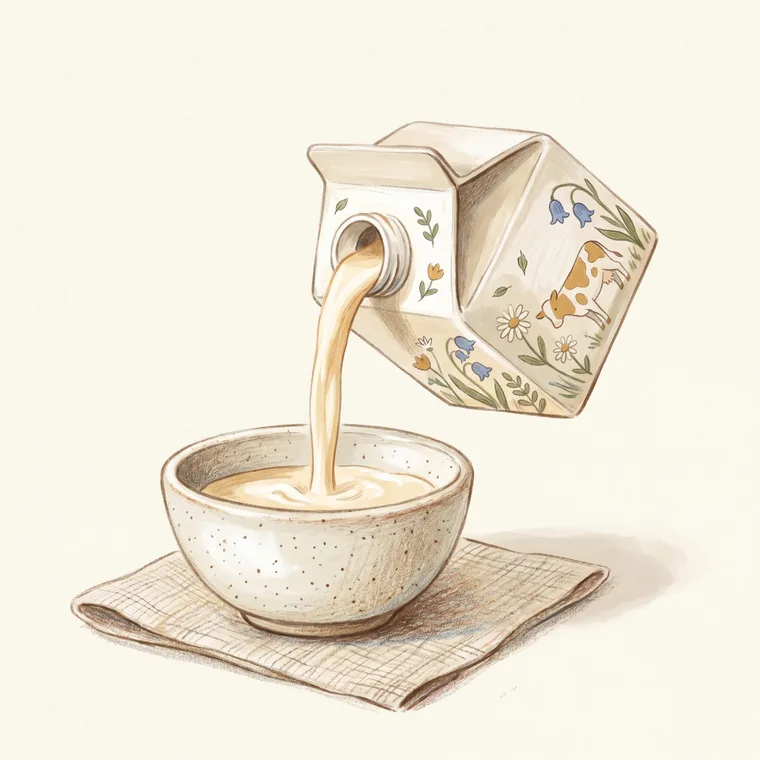
You can in a pinch, but half-and-half freezes worse than heavy cream. Sitting around 10–12% fat — half milk, half cream — it lacks the fat that protects richer cream, so it thaws noticeably separated and grainy. That makes it disappointing in coffee but fine stirred into soups, sauces, and baking. Freeze it about 2 months, ideally in recipe-sized cubes, and reserve thawed half-and-half for cooked dishes.
Can you freeze half-and-half?
Yes — with caveats- Shake the carton well, then pour half-and-half into an ice-cube tray for two-tablespoon portions.
- Or decant it into a small tub, leaving headspace, since the liquid expands as it freezes.
- Freeze until solid and transfer cubes to a labelled bag, squeezing out the air.
- Date it, and use the cubes for cooking rather than saving them for your morning coffee.
More in this group: Freezing dairy & eggs
Frequently asked questions
Why does half-and-half separate worse than heavy cream?
Fat is the difference. Half-and-half is roughly 10–12% fat against heavy cream's 40% or more. More water and less fat means more disruptive ice crystals and nothing to cushion them, so half-and-half thaws far more split and grainy than richer cream.
Can you put thawed half-and-half in coffee?
It is safe, but it tends to fleck and look curdled in hot coffee because the fat has separated and the acidity of coffee finishes the job. For coffee, keep fresh half-and-half; freeze the surplus for soups, sauces, and baking instead.
Is it better to freeze half-and-half or heavy cream?
Heavy cream, every time. Its high fat content protects it in the freezer, so it thaws with only mild graininess. If you have a choice and plan to freeze, buy and freeze heavy cream, then dilute it with milk later if a recipe wants half-and-half.
How long does half-and-half keep frozen?
Treat two months as the quality limit. Kept constant at 0 °F (−18 °C) it stays safe much longer, but it arrives heavily separated and only worsens, so use it early and only in cooked dishes; when in doubt follow USDA guidance.
Sources
- NDSU Extension — Freezing Dairy Products, Eggs and Other Foods — North Dakota State University Extension, checked 2026-06-13
- National Center for Home Food Preservation — Freezing Cheese & Dairy — University of Georgia / NCHFP, checked 2026-06-13
- USDA FSIS — Freezing and Food Safety — USDA FSIS, checked 2026-06-13