Can You Freeze Soup?
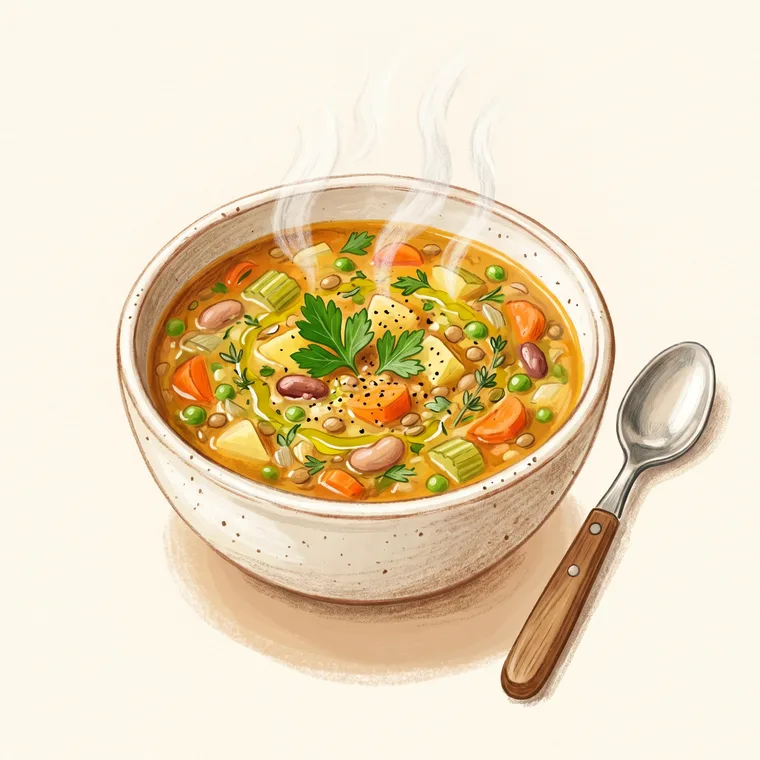
Yes, and soup is one of the best things to batch-cook and freeze. Most brothy, vegetable, and bean soups freeze beautifully in portions for about 2 to 3 months, per USDA data. The exceptions are cream- and potato-heavy soups, which can split or turn grainy — leave the dairy out and stir it in when you reheat. Cool quickly and leave headspace for expansion.
Can you freeze soup?
Yes — it freezes well- Cool the soup quickly after cooking — a shallow container in an ice-water bath speeds it up — to limit time in the bacterial growth range.
- Ladle it into portion-sized containers or bags, leaving 2–3 cm of headspace because liquids expand as they freeze.
- For cream- or milk-based soups, freeze the base without the dairy and add it fresh when reheating.
- Seal, label with the contents and date, and freeze flat where possible to save space.
More in this group: Freezing cooked dishes & leftovers
Frequently asked questions
Which soups don't freeze well?
Cream-based and heavily potato-based soups are the weak spots: cream can split into a grainy curdle and cooked potato turns mealy. Freeze the base without the dairy and stir cream in when reheating, or accept a slightly rougher texture.
Why do you leave space at the top when freezing soup?
Liquids expand as they freeze, so a brim-full sealed container can crack or force its lid off. Leaving a couple of centimetres of headspace gives the soup room to expand without bursting the container.
How do you reheat frozen soup?
Tip it frozen into a pan over low heat, stirring as it loosens, or thaw it in the fridge first for speed. Bring it to a steady simmer — about 165 °F (74 °C) — so it is hot all the way through before serving.
Sources
- FoodSafety.gov — Cold Food Storage Chart — USDA FoodSafety.gov, checked 2026-06-13
- USDA FSIS — Freezing and Food Safety — USDA FSIS, checked 2026-06-13